A garbage disposal in a Newton kitchen sounds unstoppable. Flip the switch, hear the grind, and almost anything on the plate seems to vanish. In practice a disposal is a modest grinder with clear limits, and most of the jams, clogs, and early motor failures plumbers see come from a short list of foods that should never have gone in. The damage rarely happens all at once. It builds, load by load, until a holiday dinner finishes the job.
Understanding what a disposal actually does helps. It does not have sharp blades like a blender. A spinning plate and impellers throw food against a grind ring, shredding it into fine particles that wash away with water. Anything stringy, starchy, hard, or greasy defeats that simple mechanism in its own way.
The numbers behind the limits
Cold water matters more than most people realize. Run cold water before, during, and after grinding. Cold keeps grease in solid pieces that the grind ring can reduce and the flow can carry. Hot water melts grease just long enough for it to pass the disposal and solidify further down the pipe, where it coats the line and traps every particle that follows.
The foods that cause the trouble
Grease and cooking oil top the list for clogs. Potato peels, rice, and pasta cause a different failure: starch turns to paste, and peels can form a mat that blocks the drain beyond the disposal. Celery, onion skins, corn husks, and other stringy fibers wrap around the impellers and jam the plate. Bones larger than small chicken fragments, fruit pits, and shells stall the motor outright. Coffee grounds do not jam the unit, but they settle like sediment in traps and low spots, adding to slow drainage over months.
Eggshells are the most argued item. They do not sharpen anything, since there are no blades to sharpen, and the membrane can stick to grind components. Small amounts washed through with plenty of water are not the main enemy, but they belong in the trash or compost as a habit, not in the disposal as a routine.
When it jams: the safe sequence
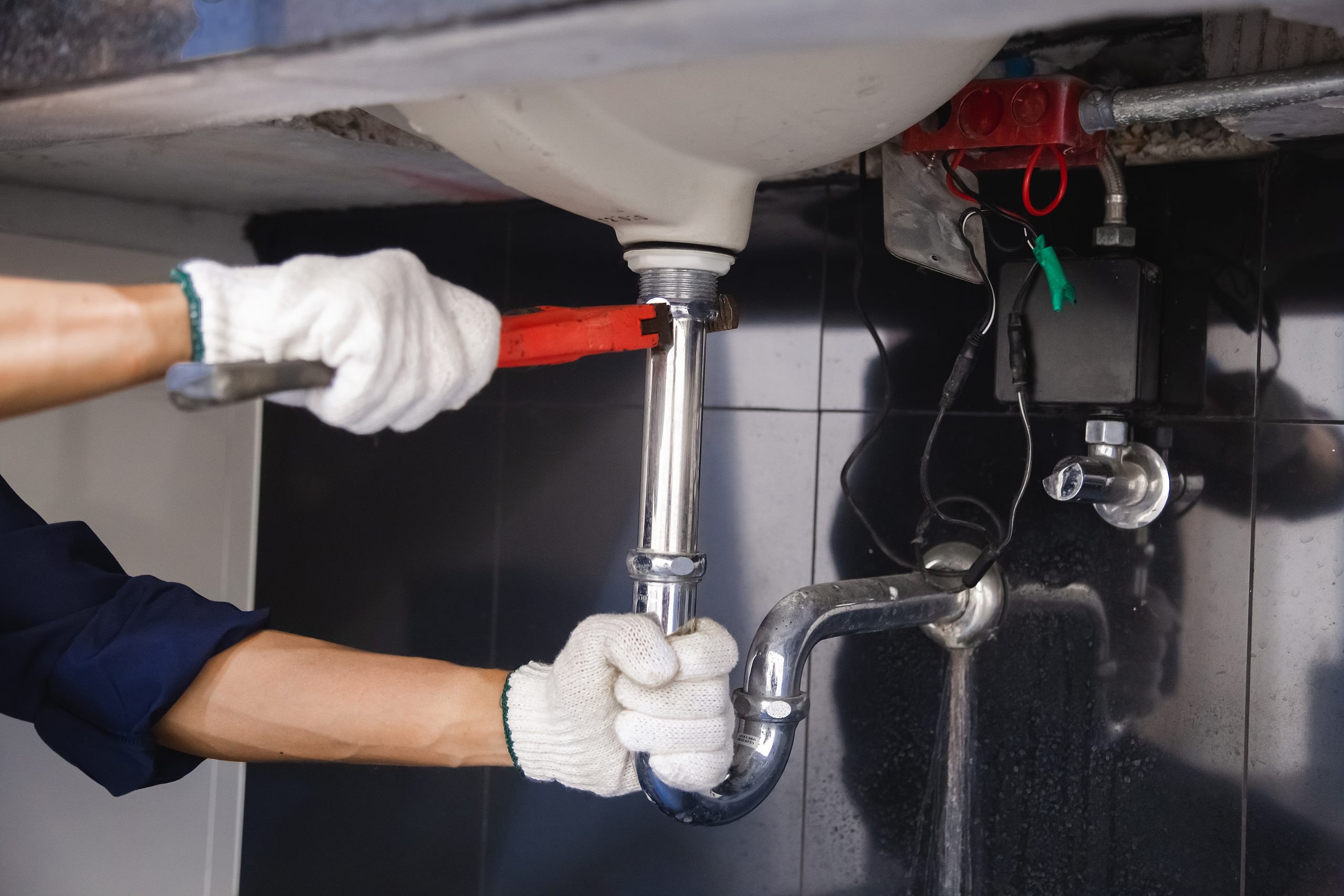
Turn the switch off first. Never reach into the chamber with fingers, even with the switch off. Find the reset button on the bottom of the unit: a tripped overload is the most common reason a disposal hums or sits silent. If the plate is jammed, most units have a hex socket in the center of the underside that an Allen wrench can turn back and forth to free it, with power off. Tongs or pliers can lift out a pit or bone you can see. Then run cold water, press reset, and test.
If the unit leaks from the bottom seal, trips the reset repeatedly, or grinds with a loud metallic rattle, the problem is wear, not food, and replacement is usually the honest fix. Repeatedly freeing a dying disposal teaches the wrong lesson, because a motor that stalls under normal loads is telling you its service life is done.
The cost of waiting
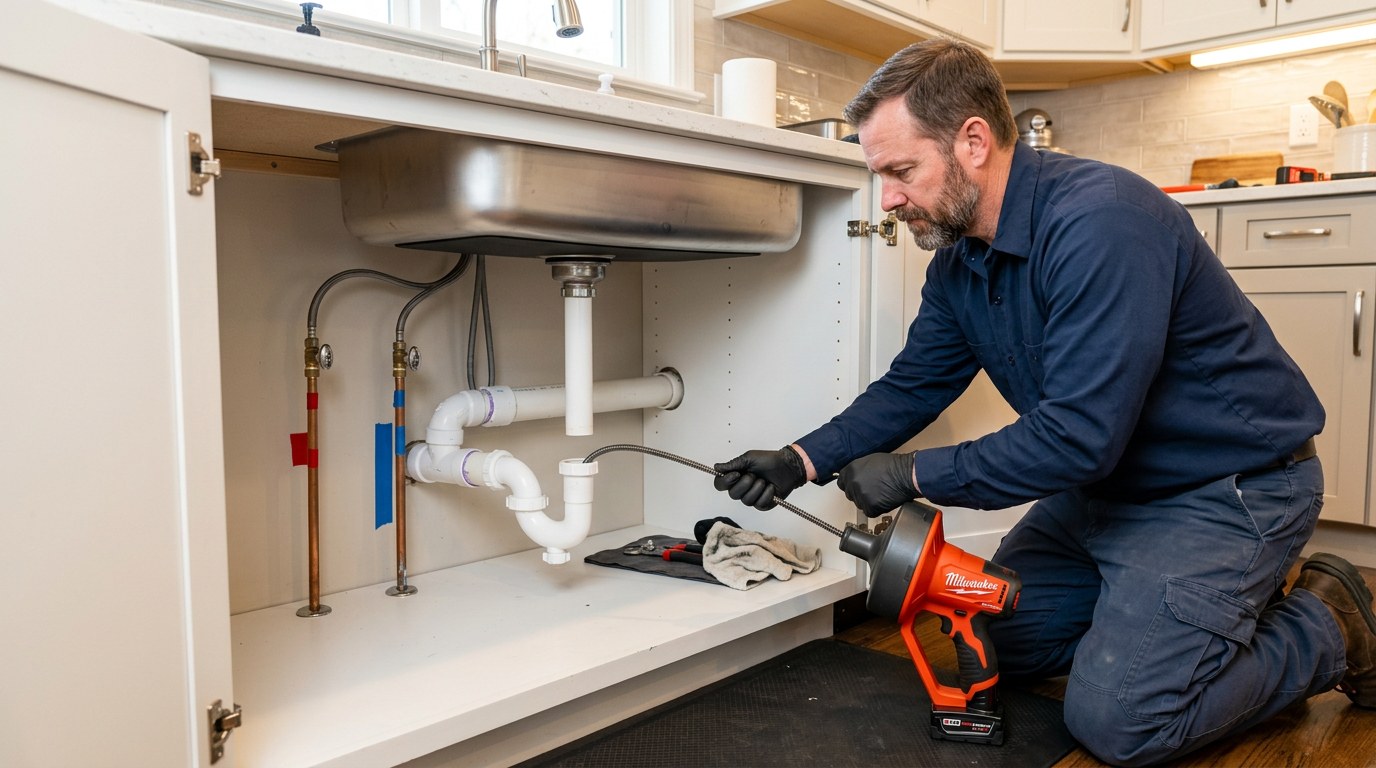
A slow kitchen drain ignored through the fall becomes a full blockage during the biggest cooking week of the year, with a house full of guests and a sink that cannot be used. Grease coating inside a line also narrows it for everything else, so a drain that once cleared a pasta pot now backs up on a normal load. Feeding the disposal correctly, scraping plates into the trash, and wiping greasy pans with a paper towel before washing are dull habits that keep a Newton kitchen out of that story. When a clog sits beyond the trap or returns within weeks of clearing, it is time for a drain cleaning from a service such as Charlie's Plumbing & Drain rather than another bottle of chemical opener.
Common questions
Why does my disposal hum but not spin?
The plate is usually jammed by a hard object or fiber, or the overload has tripped. Turn it off, free the plate with the hex socket underneath if your model has one, remove the obstruction with tongs, then press reset.
Can I put ice cubes in the disposal?
Yes. Ice helps scour the grind chamber and knock buildup off the ring, and it is one of the few hard items the unit handles well. Follow it with cold water to flush the particles out.
Is it safe to run the disposal without water?
No. Water carries ground particles through the trap and drain and keeps the unit from overheating. Always run a strong stream of cold water during grinding and for a short time after you switch it off.
Photos in this guide are representative stock images.
← All guides from Charlie's Plumbing & Drain← Back to Charlie's Plumbing & Drain