A slow drain in a Newton home rarely starts slow. A bathroom sink that once cleared instantly begins to hold a swirl of toothpaste water. The tub leaves a ring because it sat full for ten minutes. Most people reach for a chemical opener at that point, and most of the time the chemical is aimed at the wrong material in the wrong place. Knowing what is actually down there turns a frustrating guess into a short, orderly job.
Drains slow for physical reasons. Hair binds with soap scum in bathroom lines. Kitchen lines coat with grease that catches food particles. A vent problem can make even a clear pipe drain poorly, because the system needs air behind the water. This walkthrough takes a first-timer through the checks in the order a plumber would try them, stopping where home methods end.
What is really down there
In a bathroom sink or tub, the clog is usually within the first few feet: a mat of hair and soap at the stopper or trap. Pop-up stoppers are magnets for it. In a kitchen, the blockage is often further along, where grease narrowed the pipe over years and the disposal added fine particles. In a main line, tree roots and settled debris slow every fixture at once, and the lowest tub or floor drain shows it first. If only one fixture is slow, think local. If several are slow or gurgling, think beyond the fixture.
The first-timer sequence
- Start with the stopper. Lift or unscrew the sink stopper and pull the hair mat off it. Run water and test before doing anything else, since this alone fixes a large share of slow bathroom sinks.
- Try the plunger correctly. Block the overflow opening with a wet cloth, add enough water to cover the plunger cup, and plunge with steady strokes. A plunger moves a near clog; it does little for a distant grease blockage.
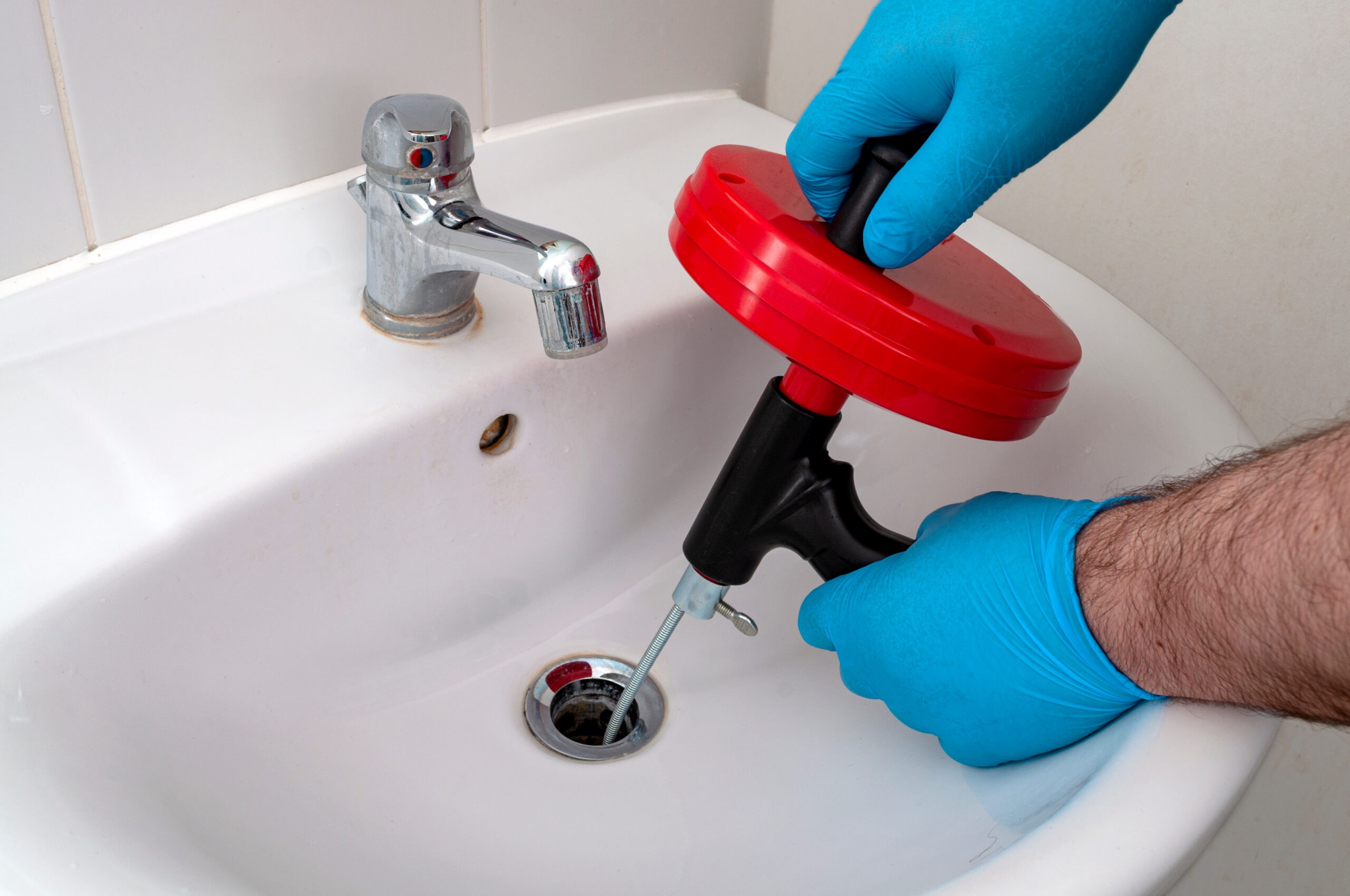
- Use a plastic hair tool or hand auger. Feed the tool or a small hand-crank auger into the drain to hook and pull material out. Pulling out beats pushing through, which can pack a clog tighter.
- Clean the trap if the clog persists. Place a bucket under the sink trap, loosen the slip nuts by hand, and empty the trap contents. Reassemble snugly by hand, then test with a full sink of water while watching for drips.
- Flush and observe. Run hot water in a kitchen line after mechanical clearing to carry loosened residue out, then watch how the drain behaves over the next day of normal use.
- Stop before chemicals on a total blockage. Chemical openers sitting in a fully blocked line create a hazardous pool that the next person to open the pipe will meet. If nothing moves after mechanical tries, call a plumber and say what you already attempted.
Why repeated chemicals cost more later
Used once in a while on a partial clog, a chemical opener may clear a line. Used repeatedly, strong chemicals can damage older metal pipes and traps, soften some plastic joints, and kill the bacterial balance a septic system depends on. The larger cost is diagnostic: chemicals can clear a small hole through a large grease mass, giving a week of normal drainage while the mass remains, ready to close again during a gathering. Mechanical cleaning removes material. Chemicals mostly rent you an opening.
Enzyme-based maintenance products are a different category. Used regularly in a cleared line, they help digest organic buildup and are gentler on pipes and septic systems. They maintain; they do not rescue a blocked drain.
When slow means something bigger
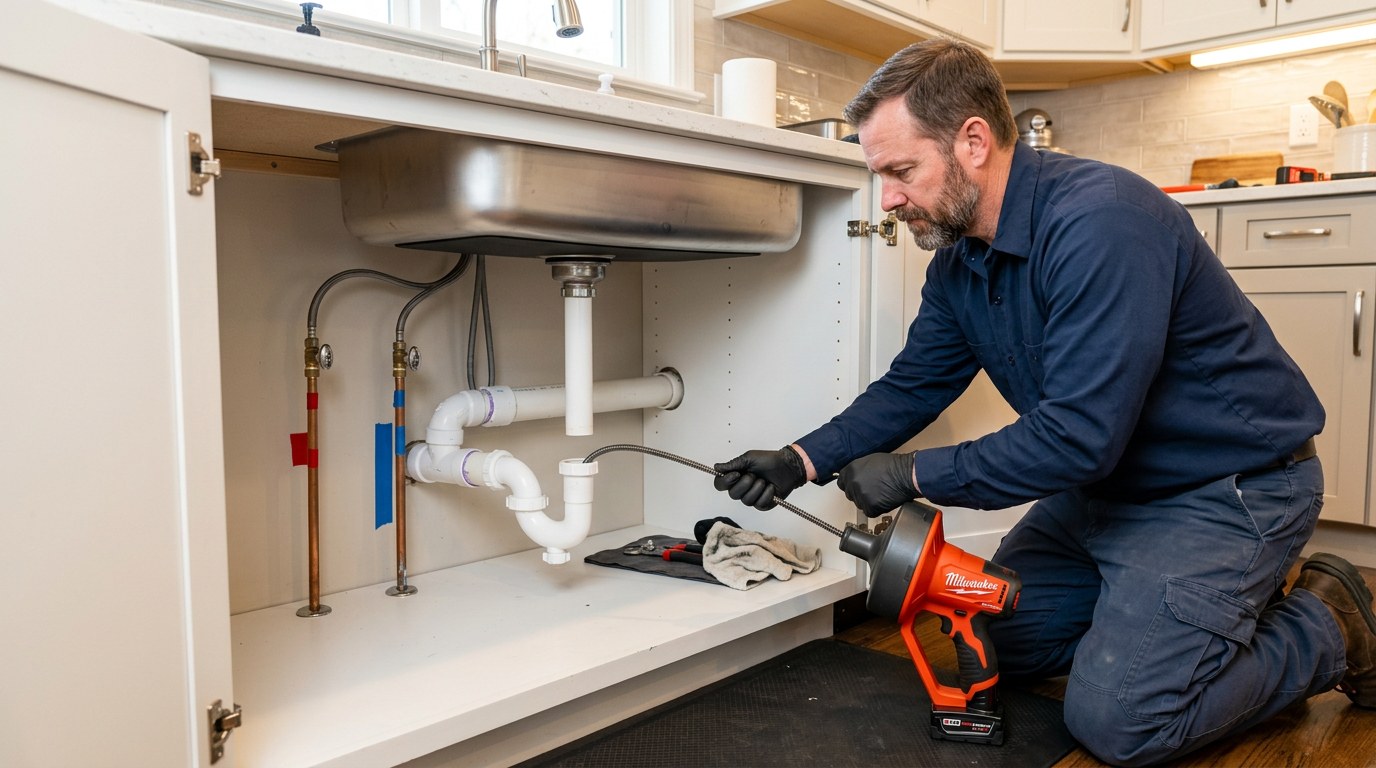
Gurgling from a tub when the toilet flushes, water rising in a shower when the washing machine drains, or every fixture slowing together points to a main line or vent issue, not a hair mat. In Newton, older lines and tree roots are a common pairing. A camera inspection settles the question in one visit and prevents the cycle of clearing the same symptom every few months. Services such as Charlie's Plumbing & Drain can auger a main line and show you the footage, which turns a recurring bill into a single repair decision.
Common questions
My drain is slow but not clogged. Should I act now?
Yes. Slow is the early, inexpensive stage, when a stopper cleaning or hand auger usually solves it. A fully blocked line leaves you without the fixture and narrows your options, especially before guests arrive.
Can I use a chemical opener if I have a septic system?
Strong chemical openers can harm the bacteria a septic system relies on. Mechanical clearing is the safer first choice, and enzyme maintenance products labeled for septic use are the gentler ongoing option.
Why does my sink gurgle when it drains?
Gurgling usually means air is being pulled or pushed through the trap because venting is restricted or a partial blockage is disturbing flow. If several fixtures gurgle, have the vent and main line checked rather than treating one drain.
Photos in this guide are representative stock images.
← All guides from Charlie's Plumbing & Drain← Back to Charlie's Plumbing & Drain